
Storytelling in Relationship
What What Came West reveals about visibility, responsibility, and collaboration
Stories shape the way we understand place.
They influence whose lives are remembered, whose experiences are centered, and whose histories become part of our collective understanding.
For generations, narratives of the California gold rush have occupied a powerful place in the American imagination and mythology, often portraying the Sierra Nevada as an untamed frontier awaiting discovery.
Lost in those stories are the Indigenous communities who have stewarded these lands since time immemorial, and the profound violence, displacement, and environmental destruction wrought by colonization.
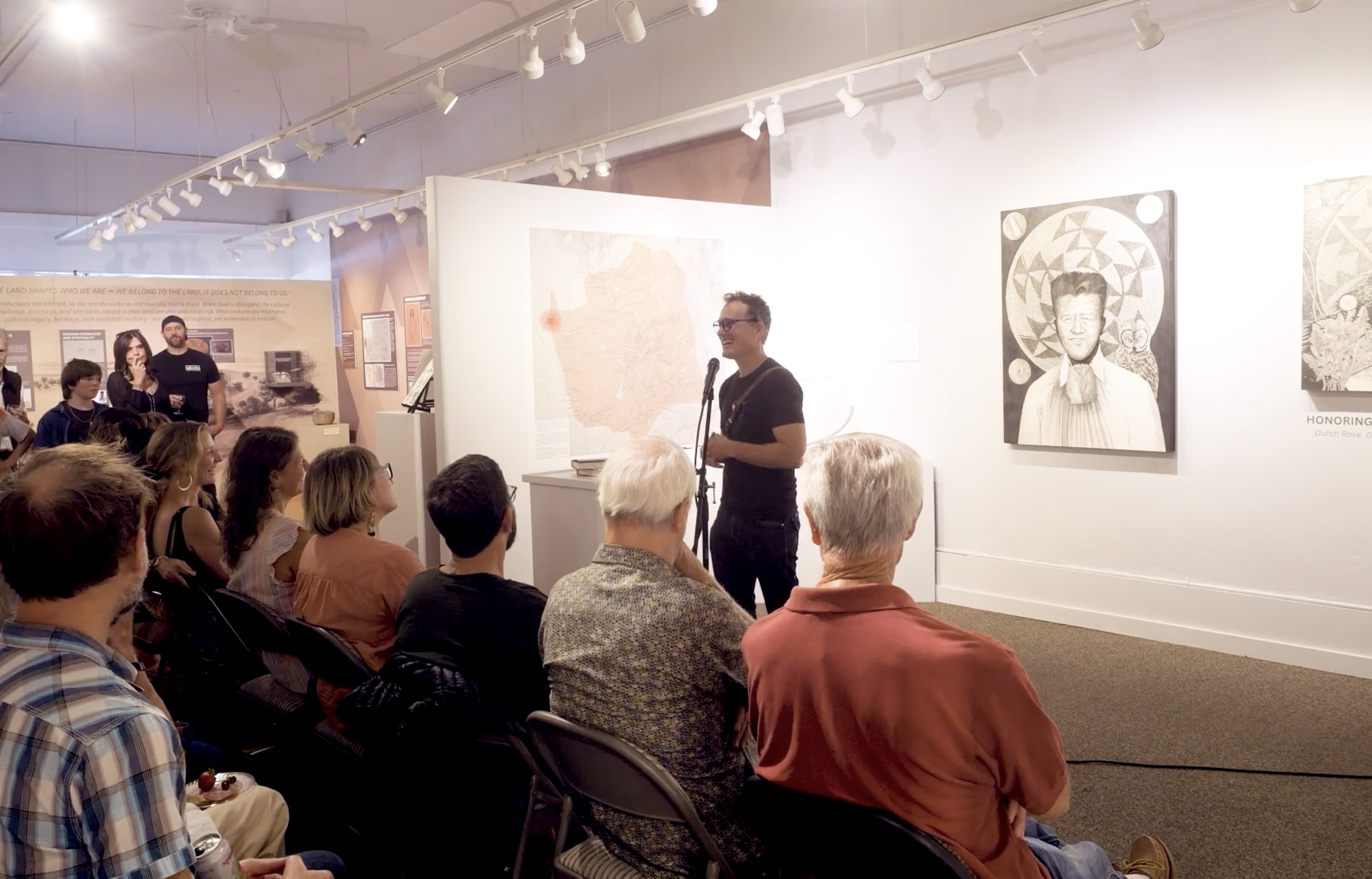
Josh Weil introduces his new novel What Came West at ‘UBA SEO: Nisenan Arts & Culture
On May 31, HUṠWEJ and‘UBA SEO: Nisenan Arts & Culture hosted the official launch of What Came West, a newly released novel by Josh Weil set in the Sierra Nevada at the cusp of the gold rush. Beyond celebrating the launch of the novel, the evening became a discussion about how stories are told, who gets to tell them, and what it means to engage in Indigenous history with care.
The conversation between Josh and Nevada City Rancheria Nisenan Tribal Spokesperson Shelly Covert offered a powerful example of how relationship, responsibility, and visibility are interconnected – and why all three matter when telling stories rooted in Indigenous Lands and histories.
Relationship Before Story
One of the most important themes of the evening was relationship.
For generations, Indigenous communities have experienced extractive dynamics with Western researchers, historians, anthropologists, journalists, and authors. Knowledge was gathered. Interviews were conducted. Stories were recorded. Academic papers, books and archives were created, published, and profited off of.
Too often, however, those relationships ended there.
Knowledge shared by Indigenous Elders and Tribal communities were frequently documented and circulated without meaningful reciprocity, ongoing accountability, or continued relationship with the communities from which they came.
In many cases, Cultural knowledge and oral histories became Western institutional property, while the communities who shared them received little recognition, compensation, or agency over how that information was used. Indigenous wisdom itself became another site of colonial extraction.
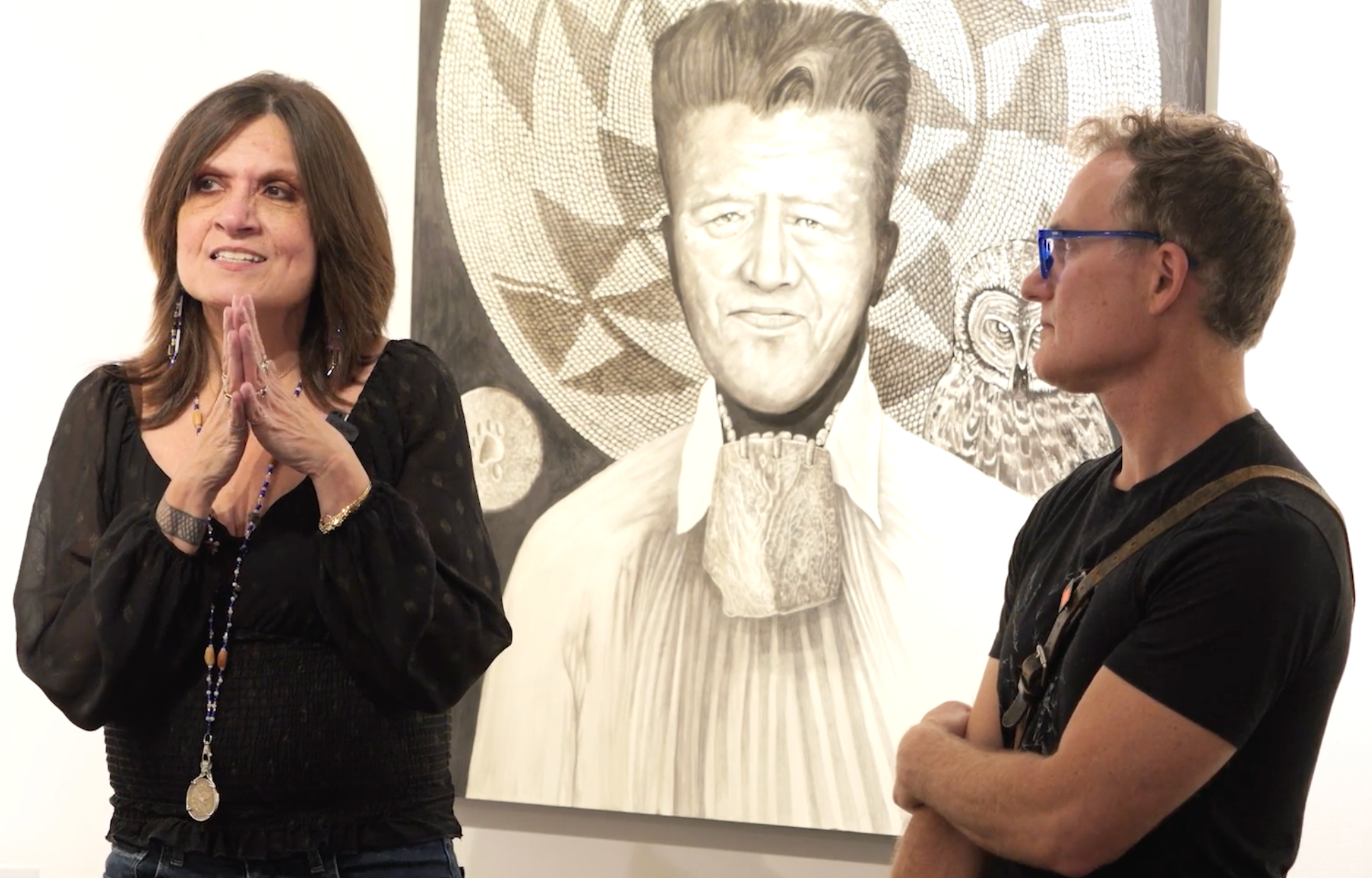
NCR Nisenan Tribal Spokesperson Shelly Covert and author Josh Weil discuss the consultation of Nisenan representation in What Came West over the course of more than five years.
The Nisenan are no exception to this trend.
This history has contributed to a justified caution toward outside researchers and institutions – not because Indigenous communities are unwilling to share, but because sharing has too often occurred within systems built on exploitation rather than reciprocity.
During the discussion of What Came West, Shelly reflected on this reality, noting that historically many Nisenan interactions with Western researchers were fundamentally one-sided. Information was gathered and carried away, while the relationship itself rarely extended beyond the needs of the project.
Against that backdrop, Shelly’s collaboration with Josh unfolded differently.
Over the course of more than five years, conversations moved beyond fact-checking or historical consultation. Questions led to more questions. Drafts were reviewed and revisited. Historical uncertainties were discussed openly.
Rather than treating Nisenan history as research material to extract or Nisenan characters as plot devices for his protagonist’s development, Josh approached the work through relationship – returning again and again with curiosity, humility, and a willingness to listen.
As Shelly shared during the event, those conversations often opened new ways of thinking about history itself, creating opportunities for mutual learning rather than one-way extraction.
Responsibility and Limits of Storytelling
Relationship alone, however, is not enough.
The conversation also explored responsibilities that come with telling stories rooted in Indigenous history and place.
Throughout the evening, Josh spoke candidly about questions that shaped his writing process:
What stories do I have the right to tell? What perspectives are mine to write from? How do I engage this history without speaking for people whose experiences are not my own?
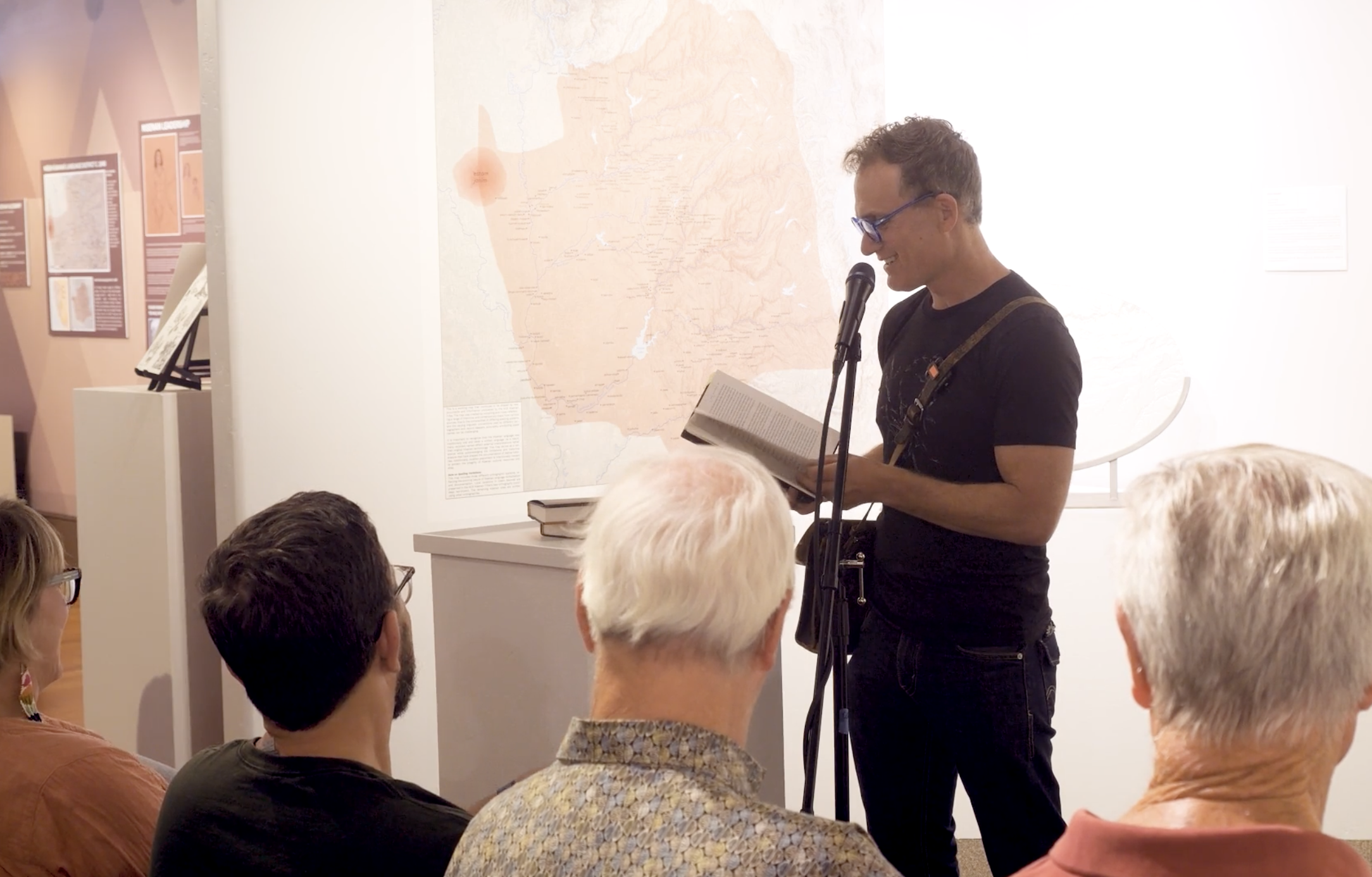
Josh Weil reads an excerpt of What Came West at the book launch at ‘UBA SEO: Nisenan Arts & Culture
At HUṠWEJ, we often remind allies, researchers, educators, and artists that Nisenan Cultural knowledge is not public domain. Stories, language, symbols, names, and teachings are not simply resources waiting to be used by anyone who encounters them.
These are living expressions of a living People.
For generations, Indigenous communities have had stories told about them, rather than by them – resulting in stereotypes and appropriation. This is a form of erasure.
Responsible storytelling means recognizing that the Nevada City Rancheria Nisenan Tribe retains the right to determine how, when, and by whom its Culture and stories are shared.
One of the most meaningful examples of this responsibility emerged in Josh’s discussion of narrative perspective.
While Nisenan characters are present throughout the novel, Josh made a conscious decision not to write from the internal perspective of a Nisenan character. Rather than attempting to speak in a voice that was not his own, he focused on creating a historically-grounded world informed by Tribal consultation, while acknowledging the limits of his own experience and understanding.
That distinction may seem subtle, but it reflects an important principle: permission and collaboration does not grant ownership.
Relationship does not create entitlement to stories. Instead, ethical storytelling requires ongoing attention to boundaries, protocol, and respect for communities whose histories are being represented.
Visibility Through Storytelling
Visibility is not created through representation alone. It emerges when stories are rooted in relationship and carried forward with responsibility.
For the Nevada City Rancheria Nisenan Tribe, visibility is not simply about being seen. It is about restoring presence where there has been erasure, and ensuring that Nisenan People are remembered, acknowledged, and understood in the fullness of truth of what happened on these Lands.
Throughout the discussion, Shelly spoke about the importance of moving beyond histories that reduce Indigenous People to the distant past. Too often, Native communities appear only briefly in narratives of California history before disappearing from the story altogether.
Yet the Nisenan did not disappear.
They remain a living People with enduring relationship to their Ancestral Homelands.
Stories have the power to either reinforce erasure, or challenge it.
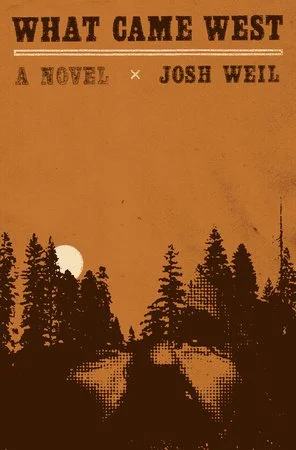
Cover image of What Came West
By placing Nisenan presence within a broader narrative of the gold rush era, What Came West invites readers to encounter a more complete understanding of this place. It asks readers to recognize that the Sierra Nevada was never an empty landscape awaiting settlement, but a Homeland already shaped by thousands of years of stewardship, community, and belonging.
Importantly, visibility is not achieved by simply including Indigenous People within a story. Visibility emerges through the quality of the relationships behind the work, the care taken in its creation, and the willingness to confront histories that have too often been ignored.
As Josh noted during the event, stories help make history come alive. They invite readers to engage emotionally with people and places they may never otherwise encounter.
When approached responsibly, storytelling can become a powerful tool for education, reflection, and historical reckoning.
A Model for Future Collaboration
The conversations surrounding What Came West ultimately offered something larger and more nuanced than a discussion of a single novel. It offered a model.
For artists, authors, educators, filmmakers, researchers, scholars, journalists, and institutions seeking to engage Indigenous communities, the path forward begins with relationship rather than extraction.
Take time to build trust.
Listen more than you speak.
Recognize that not all knowledge is yours to access.
Understand that consultation is not a box to check, but an ongoing commitment to responsibility.
And remember that visibility is most meaningful when it emerges from collaboration rather than appropriation.
The stories of this place matter. So do the People to whom those stories belong.
By approaching Indigenous history with humility, respect, and a willingness to learn, we create opportunities not only for better storytelling, but for stronger relationships, deeper understanding, and a more honest reckoning with the history of the Lands on which we now live.
Learn More
To hear the full conversation between Shelly Covert and Josh Weil, we invite you to watch the recording of the What Came West book launch at ‘UBA SEO: Nisenan Arts & Culture.
For those interested in collaborating with the Nevada City Rancheria Nisenan Tribe, or incorporating Indigenous history, perspectives, or partnership into your work, we also encourage you to explore our Allyship resources. There you will find guidance on Cultural protocols, ethical collaboration, and how to engage in relationship-based work that honors Tribal sovereignty, knowledge, and stewardship.