
Visibility
Through Art
Visibility Through Art (VTA) is a core program of HUṠWEJ that centers art, storytelling, and Cultural expression as pathways to truth-telling, healing, and Tribal visibility.
Rooted in Nisenan leadership and guidance, VTA brings together art, Cultural reclamation, community education, and Tribal wellness to illuminate the living presence of the Nevada City Rancheria Nisenan Tribe in their Ancestral Homelands.
At its heart, Visibility Through Art affirms a simple but powerful truth: art is a vessel for memory, justice, and collective healing.
Visibility Through Art functions as an umbrella initiative, holding multiple projects that sit at the intersection of Indigenous visibility, Cultural reclamation, and creative expression. These projects include:
Curated exhibitions and public programs
Tribal Arts Enrichment and skill-sharing workshops
Collaborative art partnerships grounded in Tribal protocol and consent
Community education and truth-telling through visual and narrative arts
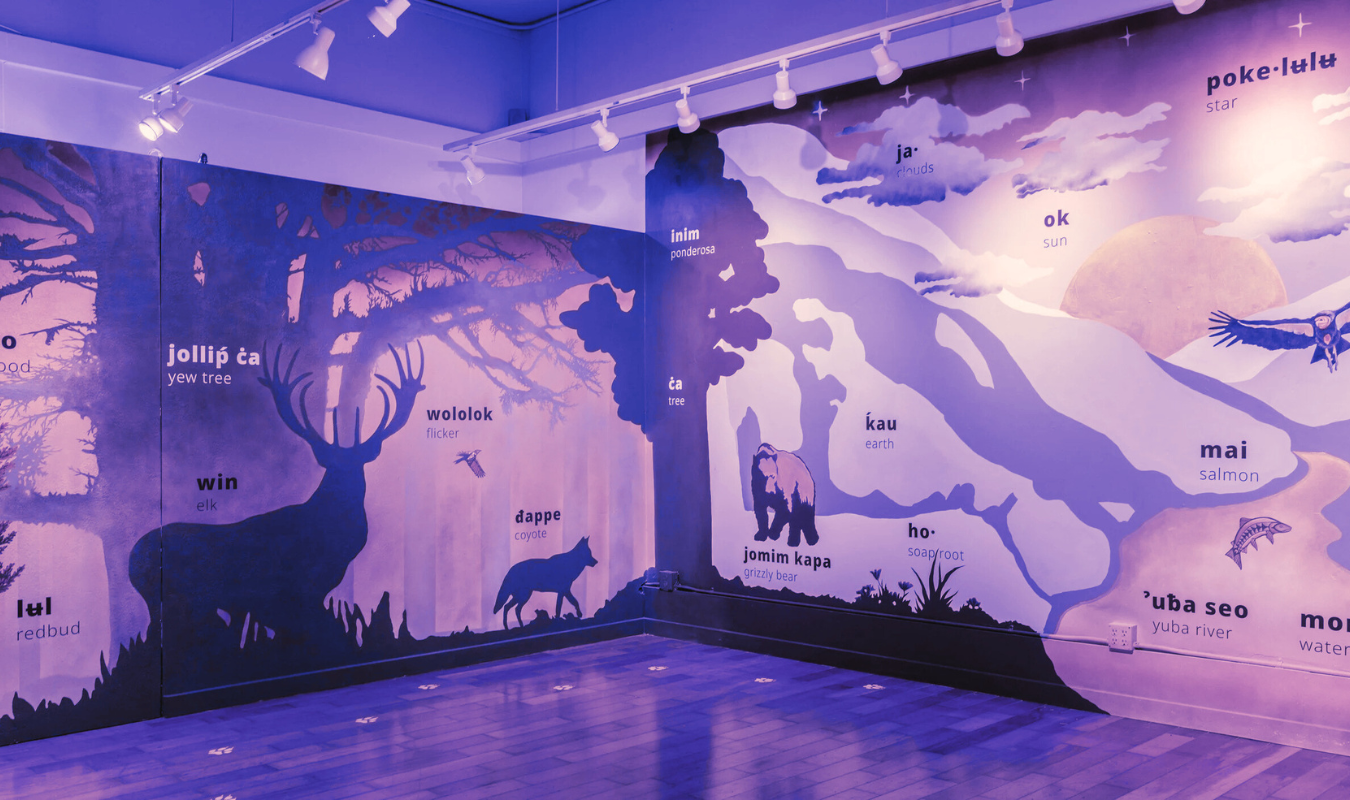
Public art installations, including murals and place-based works created in collaboration with the Tribe
Together, these efforts work to counter centuries of erasure by restoring Nisenan presence – to history, across public landscapes, and within community consciousness.
'UBA SEO
The Cornerstone of Visibility Through Art
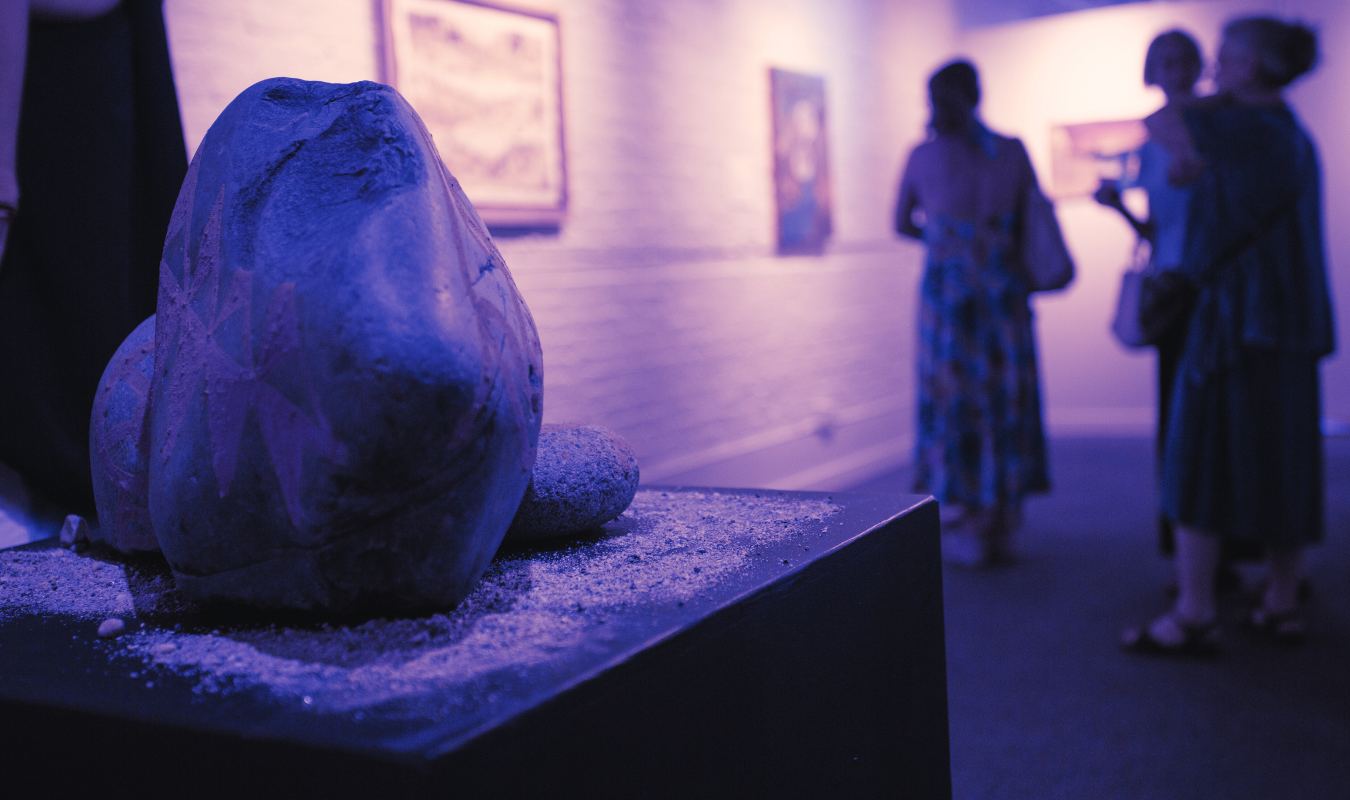
A central feature of the VTA program is 'UBA SEO: Nisenan Arts & Culture, HUṠWEJ’s brick-and-mortar gallery and Cultural space in downtown Nevada City. 'UBA SEO serves as both a public gallery and a gathering space – one where art opens the door to education, dialogue, and healing.
Through rotating exhibitions, film screenings, and special programming, 'UBA SEO elevates Nisenan stories, history, and contemporary realities, offering the broader community an opportunity to engage with the truth of this Land and its Original Peoples in meaningful, human ways.
An Evolving Initiative
From Collaboration to Tribal Creation
In its early years, Visibility Through Art invited local non-Native artists to participate in deeply guided collaborations with the Tribe. These projects required extensive listening, relationship-building, and accountability, with all artwork created under Tribal direction and final approval. The intention was clear: to create conscientious art that reflected Nisenan history and presence without appropriation or extraction.
Over time, VTA has evolved.
Today, the majority of the exhibition pieces are Tribally made, emerging directly from Tribal Arts Enrichment activities, workshops, and intergenerational knowledge-sharing. This shift reflects a growing emphasis on Cultural sovereignty, self-representation, and creative continuity – enduring that Nisenan stories are told by Nisenan hands.
While collaborations with trusted non-Native artists still occur, they are grounded in strict protocols that prioritize Tribal control, ownership, and narrative integrity.
Why Visibility Through Art Matters
The Sierra Foothills is one of the epicenters of Indigenous genocide in California, yet much of this history remains unacknowledged.
Visibility Through Art responds to this erasure by creating space for truth – truth that is sometimes difficult, necessary, and transformative.
Art offers a bridge where words alone often fail. It invites reflection without defensiveness, fosters empathy, and opens the possibility for collective healing.
For the Tribe, VTA has created moments of safety, pride, and recognition.
For the broader community, it offers an invitation to witness, learn, and open pathways to responsibility and reciprocity.
How You Can Support Visibility Through Art
Visibility Through Art is sustained through community care, reciprocity, and shared responsibility.
You can support this work by:
Supporting the Ancestral Homelands Reciprocity Program (AHRP), which helps fund Cultural, educational, and land-based initiatives that make programs like VTA possible
Donating art materials or supplies to support Tribal Arts Enrichment workshops
Sharing artistic skills or teaching workshops, when invited and in alignment with Tribal needs and protocols
Visiting ‘UBA SEO, attending exhibitions, bringing friends, and engaging with the work in person
Every visit, contribution, and act of support helps ensure that Nisenan art, Culture, and stories remain visible, protected, and alive.